
Let’s get straight to the point. You have likely heard of balut – the developing duck embryo that often sparks debate among Western travelers. While it frequently appears as a shock-factor challenge on shows like Fear Factor or Survivor, balut is actually a highly nutritious, everyday street food widely consumed across Vietnam, the Philippines, Cambodia, China, Thailand, and Laos. Let’s break down the facts, origins, and the logical way to consume it.

Origins and Cultural Footprint
The English name, balut, comes from the Tagalog phrase “balut sa puti” (wrapped in white), referring to the white membrane covering the embryo. In Vietnam, the word “lộn” carries various cultural meanings, from “reincarnation” in Alexandre de Rhodes’ dictionary to folk tales about mixed-up eggs.

Historically, its exact origin is debated. Some records suggest Chinese traders brought it to the Philippines. In Vietnam, the earliest recorded use dates back to an 1822 royal banquet hosted by Emperor Minh Mang for British envoy John Crawfurd, who noted it as the “essence of the feast”. Later, Filipino mercenaries (Manileños) and the Chinese community in Cho Lon helped popularize the dish in Southern Vietnam. Culturally, eating an odd number of eggs and crushing the shells afterward is considered a psychological comfort to reverse bad luck.
Preparation: A Matter of Timing
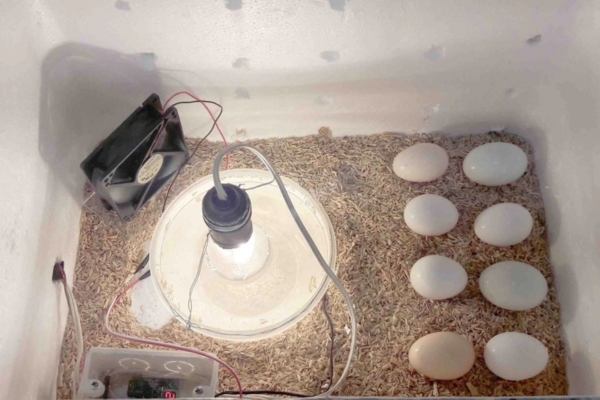
The incubation period dictates the texture of balut.
In the Philippines, it is typically incubated for around 18 days and eaten without Vietnamese coriander.
Cambodians prefer an 18 to 20-day incubation.
In Vietnam, locals prefer older eggs (19 to 21 days) with fully formed embryos, giving the egg white a firmer, chewier texture.
Nutritional Data and Practical Benefits
Nutritionally, a standard duck egg and an incubated one share an almost identical elemental makeup, but the macromolecular structure transforms during incubation. A single balut packs a dense nutritional punch: 182 kcal, 13.6g of protein, 12.4g of lipids, 600mg of cholesterol, plus calcium, phosphorus, iron, and vitamins A, B1, and C.
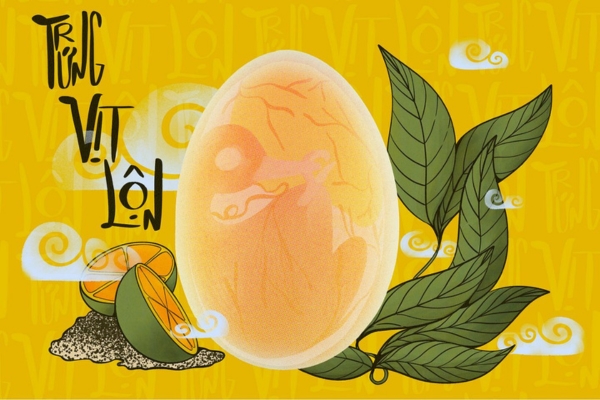
When consumed correctly, it offers clear, practical health benefits:
Energy and Blood Nourishment: It provides a rapid energy boost and helps with healthy weight gain.
Hangover Relief: The amino acid cysteine helps the liver process and eliminate alcohol toxins.
Vitality: Traditional medicine notes that its high protein content boosts male vitality and improves blood circulation.
Headache Reduction: By rapidly replenishing essential nutrients, it can relieve fatigue-induced headaches and dizziness.
The Logic of Consumption
Because balut is incredibly nutrient-dense, you must consume it strategically to avoid adverse effects.
Strict Limits: Eat a maximum of two eggs per week to avoid excess cholesterol and vitamin A toxicity, which can cause hair loss and bone weakness.
Balance the Elements: Always pair it with Vietnamese coriander (rau răm). The herb’s warm, digestive properties balance the egg’s heavy nature, preventing bloating.
Timing is Key: Avoid eating it at night; the high protein and cholesterol make it hard to digest, potentially causing insomnia. Do not eat leftover cooked eggs the next day to avoid bacterial food poisoning.
Skip the Tea: Do not drink tea immediately afterward. Tannic acid in tea binds to the protein, halting the digestive process.
High-Risk Groups: Children under five, and individuals with cardiovascular disease, high blood pressure, gout, fatty liver, or spleen issues must strictly avoid this dish.
Regional Rituals: How to Eat Balut Like a Local
The way balut is served and consumed shifts dramatically depending on where you are in Vietnam. Each region has developed its own practical logic for balancing the rich flavors of the egg.

The Hanoi Method: Practical and straightforward. The entire egg is peeled, placed directly into a small bowl, and eaten with a spoon, allowing the diner to mix the broth and egg freely with salt, pepper, and ginger.

The Saigon Style: A staple of Southern drinking culture. The balut is placed upright in a tiny, custom-sized cup with the wider end facing the sky. Diners gently crack and peel only the top of the shell, sipping the savory liquid first before scooping the egg out with a small spoon, seasoned bite by bite.
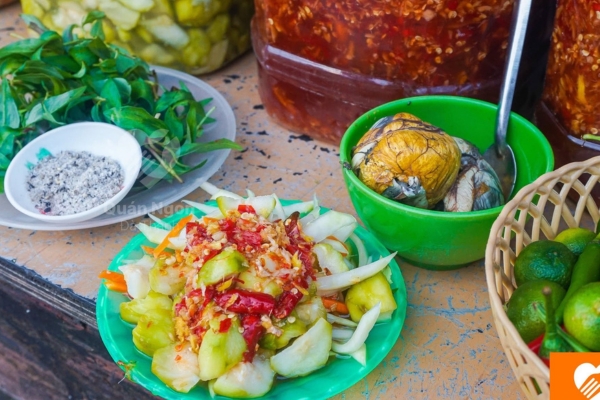
The Da Nang Approach: Coastal Central Vietnam focuses on temperature and flavor balance to eliminate any hint of fishiness. The egg is served with sweet and sour pickled papaya, fish sauce, and an intense kick of warming spices – specifically crushed bird’s eye chili, fresh ginger, and Vietnamese coriander.
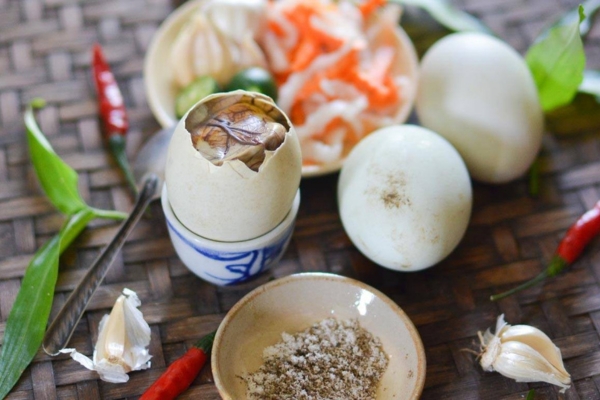
The Phan Thiet Variation: While the mechanics of eating resemble the North and South, this coastal city cuts the richness of the balut by pairing it exclusively with a crunchy, sweet, and sour mix of pickled carrots and daikon radishes.
Modern Culinary Innovations
While traditional boiling is the standard, modern Vietnamese street food has pushed boundaries, transforming balut into a versatile ingredient across various cooking methods:
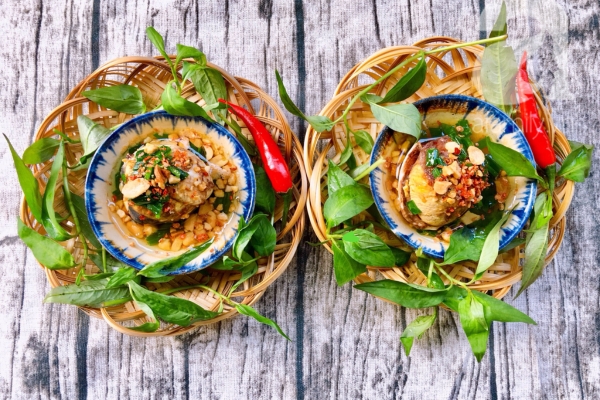
Grilled over Charcoal (Nướng): A highly popular outdoor variation. The egg is roasted over hot coals and either smothered in rich, aromatic scallion oil (mỡ hành) or drenched in a vibrant, sweet-and-sour chili sauce made from fresh garlic, lime, and sugar.
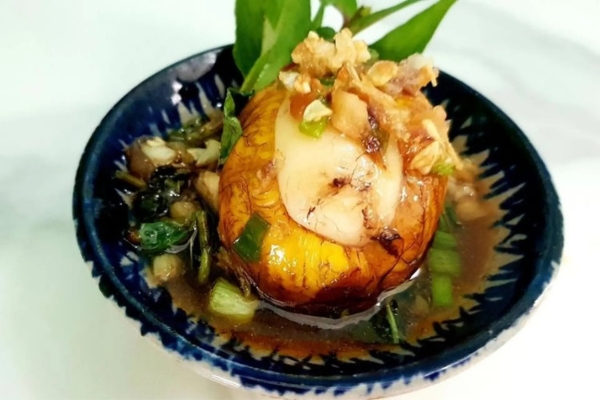
Crispy Deep-Fried (Chiên Bột / Chiên Nước Mắm): For those who prefer a textural contrast, boiled and peeled balut is heavily seasoned with salt and black pepper, coated in a light batter, and deep-fried to a golden crunch. Alternatively, it is pan-fried and caramelized in a sticky, savory garlic-lime fish sauce.
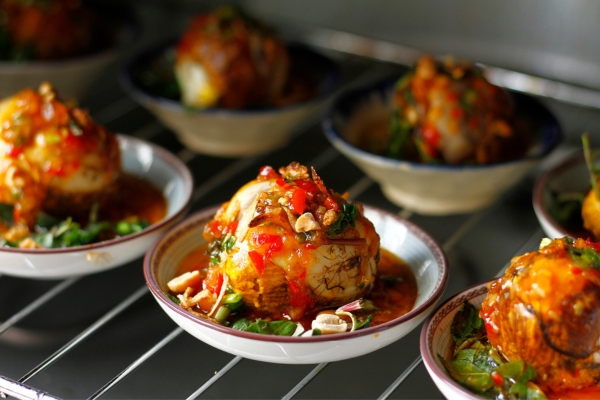
Spicy Satay Stir-fry (Xào Sa Tế): A fiery and aromatic option. The peeled egg is tossed in a hot wok with sa tế (a robust chili-garlic oil blend), creating a deeply savory and spicy profile.
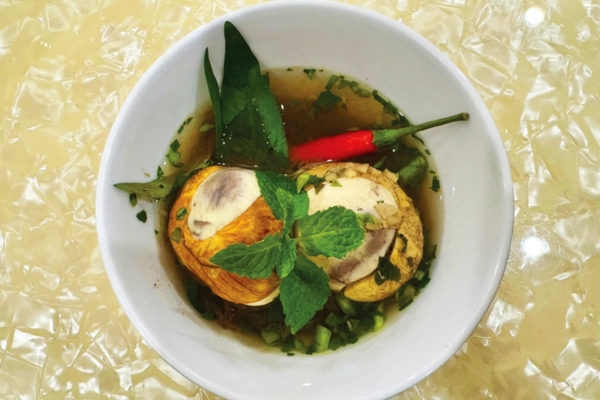
Steamed in Beer (Hấp Bia): A creative pub favorite. The egg is steamed in a closed pot with local beer and aromatic herbs. The alcohol cooks off completely, leaving behind a subtle, earthy malt aroma that elevates the natural richness of the dish.
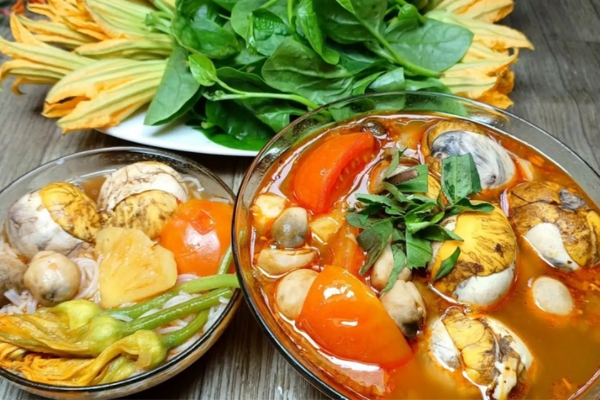
Spicy and Sour Hotpot (Lẩu Chua Cay): The eggs are cracked raw directly into a boiling, tangy hotpot broth alongside fresh vegetables. The broth infuses the egg, making it a hearty, communal dining experience.
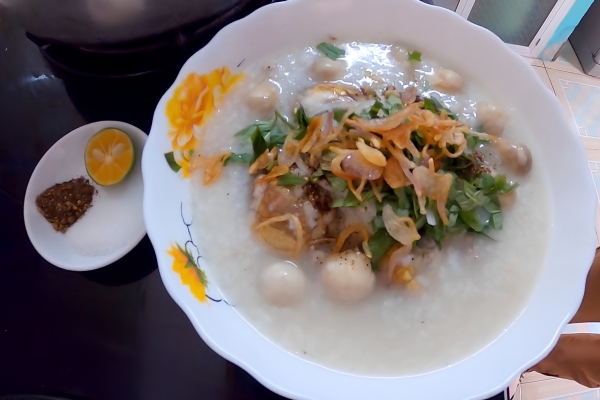
Comforting Congee (Cháo): A functional, highly nutritious meal designed for cold mornings. Chopped balut is slow-cooked with rice and rich bone broth until the mixture breaks down into a smooth, thick, and deeply comforting porridge.
The Bottom Line: Stepping Out of Your Culinary Comfort Zone
Ultimately, balut is far more than a mere culinary dare for Western travelers; it is a deeply rooted cultural experience, a masterclass in flavor balance, and a functional nutritional powerhouse. Whether you decide to keep it traditional with the straightforward Hanoi method or opt for the rich, modern twist of a grilled egg crackling over street-side coals, giving it a try offers a genuine, unfiltered taste of local life. So, the next time you find yourself navigating the vibrant streets of Vietnam, do what the locals do: pull up a plastic stool, order a balut with plenty of fresh herbs, and discover the method behind the magic for yourself.